
A Lift Chair Isn't Furniture.
It's a Promise.
A promise that someone can rest more comfortably, stand with greater confidence, and hold on to more of the independence that makes home feel like home.
Irene House is a family-run brand of Dynox Home Inc., based in Cherry Hill, New Jersey, specializing in power lift recliners that help people keep living independently at home — serving families across the contiguous United States.
The phone call we never forgot
“One evening, I answered what I expected to be a routine customer call. Instead, I heard an elderly woman crying. Even through her tears, the first thing she did was apologize for calling.
She had spent months saving for one of our lift chairs. When it arrived, she was overjoyed. The chair lifted smoothly, reclined comfortably, and for the first time in a long time, she could stand up on her own.
Then, on the second day—it stopped working.
She wasn't angry. She just kept saying she had waited so long. She had believed the chair would give her some independence back. Instead, she felt as if she had lost it all over again.
All these years later, her crying is still what I remember most.
We had accepted responsibility for a promise.
It didn't matter who made the frame, assembled the motor, or supplied a component. Our name was on the chair. That made the responsibility ours.
We already understood design, engineering, manufacturing, and the furniture market. That phone call taught us the part that mattered most: what the chair meant to the person depending on it.
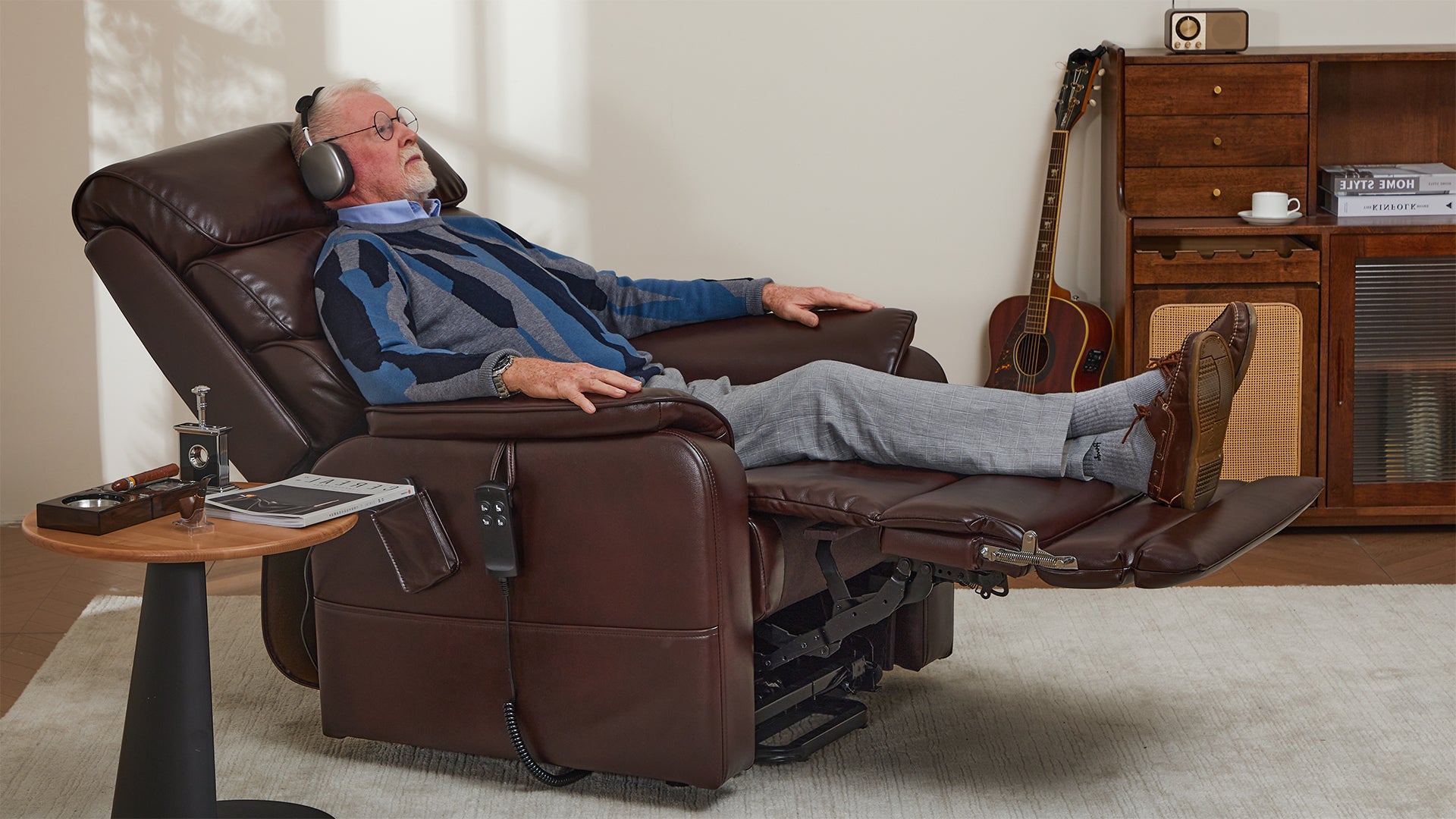
It's never just about age.
It's about life.
Getting up from a chair is something most of us never think about—until it becomes the hardest part of the day.
- Preparing for recoveryA wife getting the living room ready before her husband's surgery, so he can rest and stand more safely on his own.
- Finding the right fitA daughter looking for a chair that finally fits her petite mother and supports her without making her feel small.
- Resting through the nightA husband searching for a chair comfortable enough for the nights when a bed no longer works for him.
- A chair the store never carriedA six-foot-seven husband, a 500-lb capacity need—someone the “average” recliner was never built for, finally getting a chair truly sized for them.
Different stories, one thing in common: a lift chair is never only about sitting down. It's about continuing to live with confidence.
Confidence for the person.
Peace of mind for the family.
Our customers weren't simply buying furniture.
They were preparing for recovery. Protecting a parent. Trying to sleep more comfortably. Looking for a little less help getting up and a little more confidence moving through the day.
That changed the question behind every product decision.
Two ways of understanding one chair
Long before Irene House existed, we had already spent years learning two different parts of the same problem: how a chair should fit the person using it, and how that chair can remain dependable after it becomes part of everyday life.
Understanding how a chair should feel
Irene began her career as a furniture designer at Ashley Furniture, where she hand-sketched sofa and recliner designs and learned how small changes in proportion can completely change the way a chair feels.
Her work lived in the quiet details—the angle of a backrest, the depth of a seat, the height of an armrest, the transition into the footrest—because those small decisions determine:
- whether your feet rest flat on the floor
- whether your lower back is properly supported
- whether your body can truly relax
- whether standing up starts from a position of strength
Her work was never only about drawing a chair that looked balanced. It was about understanding how the human body would live in it.
Making sure it works in real life
He studied mechanical engineering and began his career in automotive design, where every component had to work precisely with the next. A product couldn't merely look right; it had to function reliably, withstand repeated use, and be manufactured consistently.
After returning to his furniture-manufacturing hometown, he entered the furniture industry unexpectedly. He began in product design, learning how frames, mechanisms, motors, upholstery, and movement had to work together inside a recliner.
Because he understood the product itself, he was later trained to work directly with customers and help develop furniture for the American market. That experience placed him between engineering, manufacturing, retailers, and the families who would eventually use the chairs at home.
He learned to ask different questions: Is the feature genuinely useful? Can the factory make it consistently? Will the movement still feel natural after repeated use? And when something goes wrong, can the company support the customer properly?
Her husband understood everything the chair had to endure.
Together, those perspectives became the foundation of Irene House: comfort shaped around the body, engineering with a real purpose, manufacturing that can be repeated consistently, and responsibility that continues after delivery.
A company built for the moment trust matters most
Irene House was created to bring together everything we had learned—how the body experiences a chair, how products are engineered and manufactured, and how deeply a family can depend on something that may look like ordinary furniture.
From then on, every important decision began with one standard:
would it still be good enough?”
We named the company Irene House because the way she cares became the foundation of everything we wanted this company to be: she truly feels what our customers feel, takes it to heart when something we made brings a family trouble, and finds real joy in the comfort we can give back.
The reason the company still feels personal
During the early years, Irene answered customer emails, phone calls, and messages herself. She wanted the people shaping the product to hear directly from the people living with it.
Those conversations revealed details no specification sheet could show: why a few inches of seat height mattered, why a certain movement felt safer, why sleeping comfort was sometimes more important than appearance, and why a delayed replacement part could affect an entire family.
There was never “just another order.” Every chair belonged to someone's parent, partner, or grandparent.
Our team has grown, but that habit of listening still shapes what we improve, what we test, and how we support customers after delivery.
Three kinds of trust have to come together
Trust in comfort
Proportions, support, movement, and fit should work with the body—not force the body to adapt to the chair.
Trust in the product
Mechanisms, motors, frames, upholstery, and assembly must work together consistently through repeated daily use.
Trust in the company
A family should know who to call, what support to expect, and that the responsibility will not disappear after delivery.
The promise is carried through every stage
The story only matters if it changes the way the product is developed, built, delivered, and supported.
to American families
with free shipping
UL · FCC · TB117 · Prop 65 · CE · ISO 9001
and family-run
It should help someone feel like themselves again.
Confidence that resting can feel easier. That standing can feel safer. That someone will be there when questions arise. And that the chair carrying our name was built with the person—not only the product—in mind.
Every decision still begins with one simple thought: What if this chair were for someone we love?